
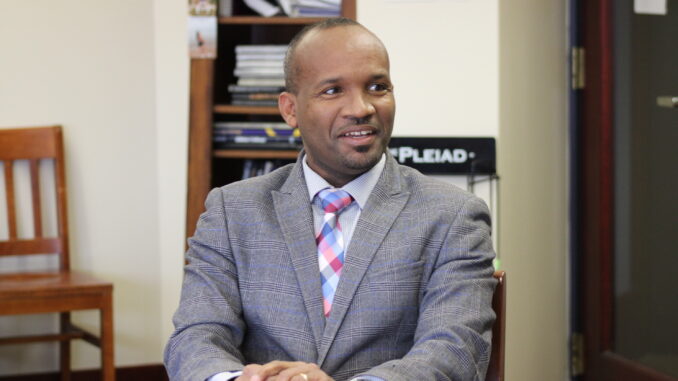
For associate professor of education and department co-chair Betty Okwako-Riekkola, it was a desire to “make a difference in somebody’s life” that led her to teach at Albion, where she said she works to connect with students and help them by drawing on her own life experiences.
Okwako-Riekkola is one of several Black professors at Albion who teach in departments ranging from communications to political science and are dedicated to teaching students and building community with them to show them they belong.
Where Did They Get Their Start?
Visiting assistant professor of political science Milkessa Gemechu was born in Ethiopia, where he was the first in his family to attend high school and earned a doctorate in federalism studies. His early teaching career was marked with political unrest, which he said would go on to impact his teaching style.
“I grew up protesting an oppressive system, an oppressive government in Ethiopia,” Gemechu said. “I participated in social movements in a very significant way.”
As a result of these protests, the movement Gemechu was a part of succeeded in getting the “authoritarian” prime minister to resign in 2018, he said. Gemechu added that he went on to hold a position in the Ethiopian government as a cabinet member for the state of Oromia, during which he “pushed for reform” and “democratic election.”
Since arriving at Albion, Gemechu said his experiences growing up in a different religious, social and linguistic setting influence how he teaches in the classroom. According to Gemechu, his upbringing gave him an understanding of how people deal with struggles.
“I’ve gone through ups and downs, challenges; I would say they made me resilient,” Gemechu said. “Whenever you face challenge, take it as an opportunity. It is for good, and it makes you strong.”
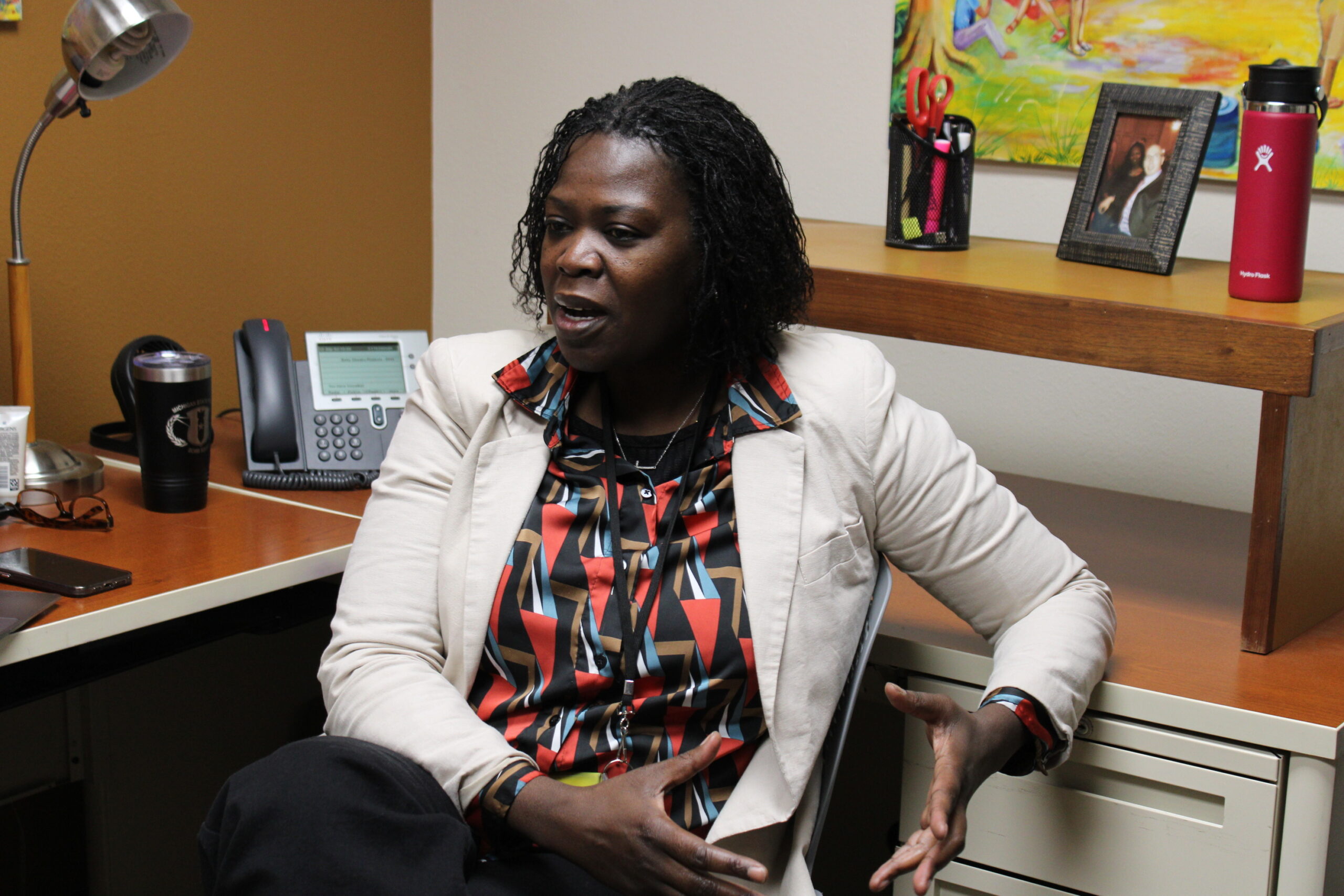
Okwako-Riekkola said she got her start teaching in Kenya, adding that her motivation was to elevate herself academically to “make a difference.”
During her doctoral program in the United States, Okwako-Riekkola said she had a group of professors look out for her and support her through the work, describing them as “guardian angels.”
Having that kind of support motivated Okwako-Riekkola to become someone like the professors who helped her and to make a difference in the lives of her students, she said.
“I want to be able to connect with students, but particularly the students who feel like they have no voice,” Okwako-Riekkola said.
Okwako-Riekkola also said she enjoys helping international students with any questions they might have about American culture and giving them reassurance. She added that she’s “fortunate” these students feel like they are able to come to her with their questions so she can help them navigate their situations.
“There’s so many things that I have been through that can be relatable, and I can share my life experiences,” Okwako-Riekkola said.
Visiting assistant professor Gilbert Kipkoetch was born and raised in Kenya before moving to the United States to earn his doctorate in communication and media studies and eventually becoming a professor at Albion, he said.
Kipkoetch said his personal life brings a new point of view that students from the Midwest haven’t been exposed to yet, adding that he has noticed a curiosity to understand more about different perspectives.
“They get to experience the world they haven’t been to yet, which kind of becomes a window of opportunity for them to experience something new,” Kipkoetch said.
Having these different ways of thinking allows students to have a global view of the world, Kipkoetch said, and gives historically underrepresented groups a sense of “efficacy and confidence” through learning about people who come from the same background.
“There’s also some sense of community that we are building together in those classrooms, which I think is a good thing,” Kipkoetch said.
The Impact of Faculty Diversity on Students
Detroit senior Bria Jackson said there can be “uncomfortability” when Black students like herself have majority white professors, adding that it’s harder to relate to course material when she can’t relate to the professor.
“When you don’t connect to your professors or don’t find a way to connect to them outside of academics, it makes it harder for you to actually grasp the things that you talk about in class or have some type of cultural connection to bring it back to,” Jackson said.
With Executive Director of Special Programs Ari McCaskill, Jackson’s “Intro to Black Studies” instructor, Jackson said that since the beginning of this semester, she has been more “engaged” with the material and “included” in the environment of the classroom.
“I feel like we’ve been unpacking a lot of things that are just not on the surface, but the reasonings, why those things happened and how it affected other things that aren’t really talked about in high school or middle school,” Jackson said.
Chicago junior Sarynete Holmes said Gemechu’s understanding of her writing made her feel a greater sense of belonging in his classroom. Being questioned for having a different writing style from her peers, Holmes said, was something she has experienced with white professors, but not with Gemechu.
“I have never had to explain myself to him,” Holmes said.
Jackson also said she had a connection with Okwako-Riekkola, her education professor, who taught her to “connect her cultural background to the classroom.”
“Having that in college was a reminder that I need to take into consideration that everybody’s from different places of the world, including myself,” Jackson said.
‘Change Starts With Us’
When Black students don’t have Black professors, Holmes said, it feels like “we don’t matter.” Holmes said she sees a lack of diversity in the classroom, which doesn’t create a sense of belonging for her.
“Because we don’t have that representation, we can’t have a voice,” Holmes said.
Jackson said she wants to see more professors of “African descent in general”; along with this, she would like to see courses that center around Black history and culture.
“I think that would be an eye-opener for a lot of people, and that would probably draw more people to take those courses,” Jackson said.
In terms of diversity, Gemechu said he sees commitment from leadership at the college, and there is always room for discussion.
“We have to move with the societal demands. We have to see our student population; based on that, we keep changing,” Gemechu said.
Representation is a “challenging issue,” Okwako-Riekkola said, but she knows that Albion is doing their best to make those milestones in diversity to foster inclusion among Black students.
“I feel like that reassurance and that level of comfortability and belonging would really be heightened and elevated if they can relate with professors who look like them,” Okwako-Riekkola said.
Having a diverse faculty helps underrepresented students see themselves in professors and have confidence that someday they can also hold a position of authority, Kipkoetch said. Albion College values diversity, he added, and he counts himself lucky to be able to work with “supportive” colleagues.
“Like in any other organization out there, there’s always lessons to learn, things to always improve on,” Kipkoetch said.
Holmes said she would like to see more Black professors on campus, even if it doesn’t happen until after she graduates. As it stands, she said, the message she is getting from the college is that Black students are here, but they “don’t necessarily belong here.”
With professors backing up Black students, Holmes said she believes the school will take their requests for a more diverse faculty more seriously.
“Change starts with us,” Holmes said.
Leave a Reply