
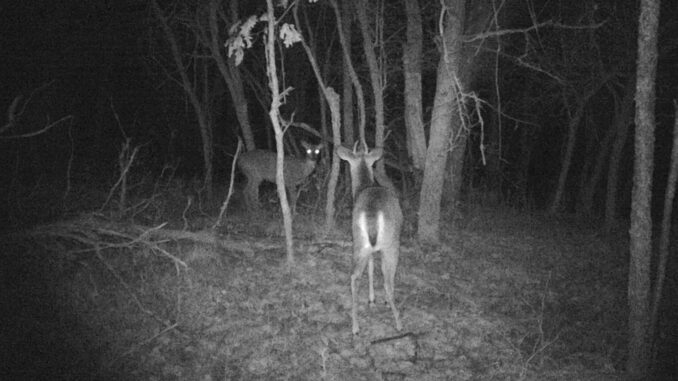
Growing up, I counted down the years until I was old enough to learn to hunt with my dad and brother.
For my family, hunting has always been more about the community than the kill. In eight years of hunting, I’ve only gotten one deer. If you ask me why I continuously sit in a twenty degree blind for hours on end, I will always say it’s to spend time with my dad.
I grew up hearing that hunting is a man’s job. That statement followed me as a young girl looking forward to her first hunt. Except, for me, hunting was never about getting the animal or proving naysayers right or wrong. I looked forward to euchre, the peace of nature and moments with my family that didn’t exist anywhere else.
My extended family’s expectations of me weren’t entirely wrong – I wouldn’t get a deer at first. However, it wasn’t because I was scared to hunt – it was because I did everything you aren’t supposed to do if you want to get a deer. For those unfamiliar with hunting, here are a few things not to do if you actually want to see, let alone hunt, deer.
What to Know as a Beginner
Number one: don’t emit a strong smell. Deer have an incredible sense of smell. They will be able to smell you from a long way away and change their route to avoid you. Scents that deer may detect include perfume, propane gas from a heater or urine.
Noise is another giveaway. Deer have a good sense of hearing, meaning they will hear every twig that you step on and every rustle of your coat. I was taught to move slowly and quietly while tracking up to the blind. Following my dad’s footsteps was the best way for me to minimize my noise. I suggest you pick up your feet when you walk to make your steps quieter.
Guns are of course a necessary part of hunting – and they can be dangerous if not respected. The government has specific laws surrounding game and licensure, and each hunting party or family may have their own additional guidelines. In order to acquire a hunting license, you must go through a hunter safety course, which teaches firearm handling, proper aiming and how to use safety mechanisms.
Proper equipment, which includes safety glasses, ear protection and proper clothing, is critical, both while actively hunting or walking back to camp. An absence of even one piece of gear may lead to injury from gun kickback or noise of muzzle blast.
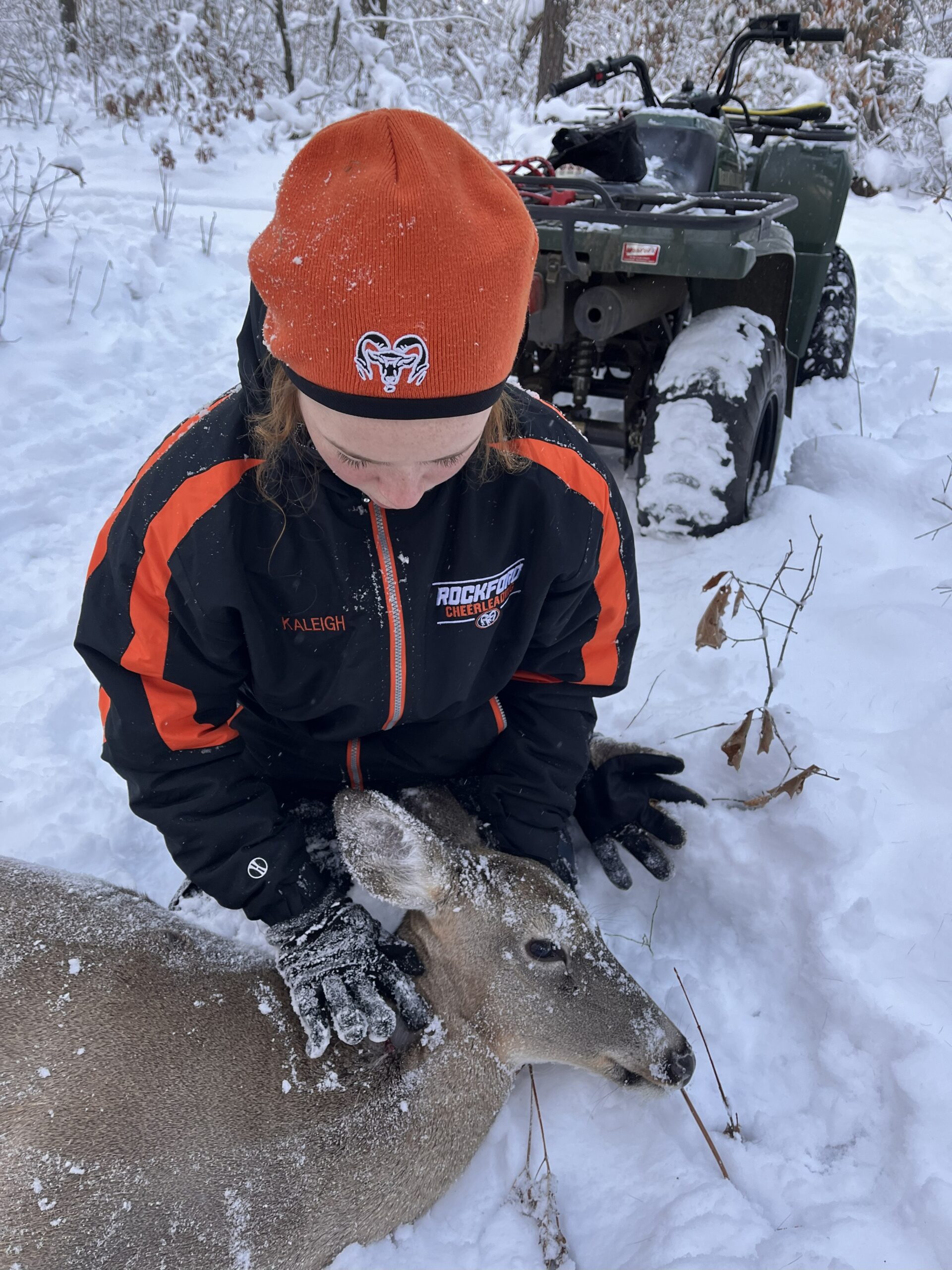
From my grandfather’s to my father’s rules, safety was always the most important part of hunting. Before I was even allowed to begin target practice, I was put through my family’s personal hunters’ safety courses.
The number one rule of the courses was simple: never point a gun at anyone, loaded or not. My father was very strict about this. He taught me that pointing a firearm at someone, even jokingly, is threatening.
The Humanity in Hunting
That leads to a question I’ve been asked before: “How is hunting humane when you’re killing an animal?”
The truth is that the goal is for the animal not to suffer. To ensure this, hunters line up their shot just behind the shoulder blade, where if hit accurately, the animal will die almost instantly. This not only reduces the suffering of the animal but also avoids long tracking jobs.
Hunting is not only a sport, but contributes to population control in many areas.
States implement regulations to support both animal and human welfare, which extends to hunting season. Depending on the population the season timeline may vary, but it includes bow, rifle, youth and antlerless hunts.
Learning to Look for the Little Things
Despite the various rules I had to follow, I’m thankful I was raised around hunting. It gave me a different view of nature. The beauty and power of nature is obvious when you sit in a blind for hours on end: gorgeous and dangerous all at the same time. The glistening of the snow may enchant you, but you must remain aware of what it is capable of.
You notice little things that you may have overlooked before, like the way a tree is shaped to look like an animal, or what a squirrel’s favorite tree is. Entertainment doesn’t come from a screen, it comes from being engaged with what’s around you.
For me, hunting is more than killing an animal. It’s about spending time alone in the outdoors, sharing stories around a flashlight and traditions passed down throughout generations.
And that’s something worth preserving.
A very heartwarming article since I too have 2 daughters who loved to hunt with me. The younger daughter, pregnant with my first grandchild, got her buck on the 17th. The older daughter, an Albion grad,sent her husband in her stead who has gotten 10
Very thoughtful and personal. What a great perspective!